DMS® (Design Maintenance System) is the transformation technology behind every Modernize Software project.
Trusted By








Formal Grammars For COBOL, SQL, JCL, And 40+ More.
Composable Rewrite Rules, Readable And Debuggable.
Same Source in, 100% repeatable results out.
Every Transformation Traceable And Reproducible.
DMS® is a mature software transformation platform that has been successfully used for more than 30 years to analyze, understand, and transform complex software systems. Over that time, it has processed more than 500 million lines of source code across 40+ programming languages, making it one of the industry's most proven platforms for large-scale software modernization. Organizations have relied on DMS to modernize mission-critical applications where accuracy, scalability, and preservation of business logic are essential.
While DMS is widely recognized for deterministic code translation, its capabilities extend far beyond language conversion. The platform has been used for code analysis, application refactoring, architecture modernization, business rule extraction, and the development of custom software engineering tools tailored to unique customer requirements.
Whether the objective is translating COBOL to Java, refactoring legacy applications, building custom analyzers, or creating specialized transformation tools, DMS provides a deterministic, repeatable, and scalable foundation for software engineering. Decades of successful deployments across a wide variety of programming languages and modernization projects demonstrate the flexibility and reliability of the platform.
DMS is not a code generator. Not an LLM. It is a deterministic transformation engine designed for zero-defect modernization at scale.
DMS is engineered specifically for industrial-scale code analysis and transformation. DMS uses classic compiler components like parsing, control-flow analysis, and data-flow analysis — but what makes DMS unique is its symbolic reasoning, pattern matching, and composable rewrite rules that enable deep, large-scale, context-aware code transformations.
Unlike probabilistic AI systems, DMS operates through formal program analysis and deterministic transformation logic.
Legacy repositories are often fragmented, inconsistent, and partially broken.
DMS:
This creates a complete and analyzable model of the system before transformation begins.
DMS analyzes the system at multiple levels
Compilation Unit Level
Global System Level
This multi-level analysis enables safe structural transformation at scale.
DMS rewrite rules are written using the syntax of both the legacy and target languages, making them readable and debuggable by engineers.
These rules are:
This allows DMS to perform complex, semantically accurate transformations while improving maintainability of the resulting code.
If DMS encounters a construct it cannot confidently translate, it flags it for engineering review. SD engineers can then extend the rewrite rule set to handle the special case. This iterative process continues until:
After 100% translation is achieved, additional rewrite rules can be applied to optimize the architecture according to customer objectives.
Examples include:
These transformations move beyond translation toward modernization.
DMS includes configurable pretty-printing capabilities.
Output formatting can be aligned with the customer’s coding standards, ensuring:
Customer engineers review the translated code and often propose further refinements.
Because the process is fully automated and rule-driven:
Changes are not manual edits — they are systematic enhancements applied uniformly.
SD maintains and executes thousands of DMS translation regression tests to validate transformation accuracy.
This provides:
By identifying transformation issues before system-level functional and performance testing, DMS significantly shortens the path to deployment.
Both can produce modern Java, C#, or C++. They differ in how correctness is established.
Coverage: 40+ source languages and 15 COBOL dialects, mixed-language estates, and mainframe encodings such as EBCDIC.
For more than 30 years, organizations have trusted DMS® to solve some of the most challenging software engineering problems. From defense and aerospace to banking, manufacturing, government, and financial services, DMS has been successfully deployed on projects involving code analysis, automated translation, application refactoring, architecture recovery, clone detection, and custom software engineering tools. Every engagement is built on the same deterministic compiler technology that delivers predictable, repeatable results at enterprise scale.
DMS has processed applications ranging from hundreds of thousands to 200+ million lines of code across 40+ programming languages. Whether modernizing legacy COBOL, translating millions of lines of C++, or building specialized analysis tools, DMS consistently delivers automation that would be impractical through manual effort alone.

Automated restructuring of 5+ million lines of C++ avionics mission software into a CORBA-compatible architecture for unmanned aerial vehicles.

Automated translation of 1.2 million lines of JOVIAL mission software to C, extending the life of critical B-2 flight software.

Automated conversion of 500,000+ lines of COBOL to C# in less than six months while preserving like-for-like functionality.
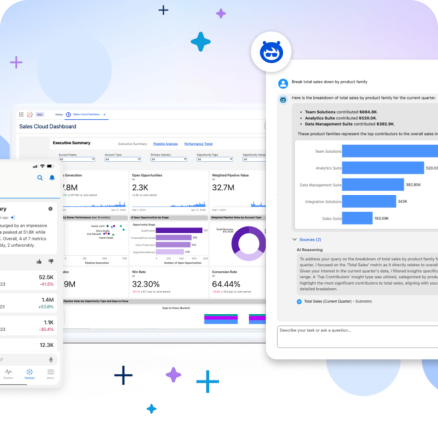
Refactored 4+ million lines of C++ by automatically restructuring APIs and eliminating God Classes.
.webp)
Delivered custom architecture analysis tools for 15+ million lines of Hogan COBOL core banking software.

Developed analysis tools for one of the world's largest legacy environments, spanning 200+ million lines of COBOL, Assembler, SQL, JCL, and Java.
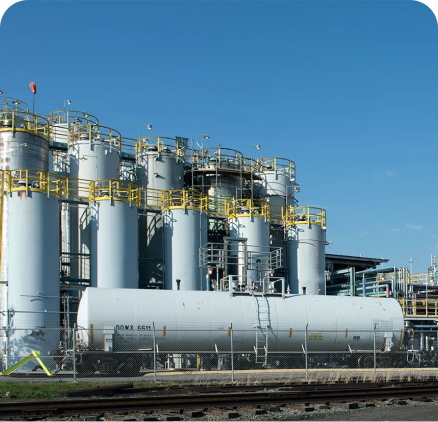
Built automated migration tools that have modernized 300+ factory control systems, preserving decades of embedded process knowledge while enabling migration to industrial controllers.
.webp)
Automated translation and refactoring of HLASM to maintainable C, reconstructed control flow, and optimization.
Used CloneDR® to identify and refactor duplicate code across multiple large C++ applications, significantly reducing maintenance costs.

Applied CloneDR® to analyze 10+ million lines of Java and C# source code to identify software plagiarism across hundreds of systems in just two weeks.
These projects demonstrate that DMS is far more than a code translator. It is a comprehensive software transformation platform that enables organizations to understand, modernize, refactor, and evolve complex applications with deterministic precision while preserving the business logic that makes these systems valuable.
Send your inventory under NDA. Complexity report, automation estimate, and rough timeline in 5 business days. No fee.
Pick 50,000 lines. We translate them to your target in 2 weeks, shown side by side with the source.
Not a salesperson. The engineers who configured DMS for the B-2 bomber and for Dow Chemical.
General questions
Yes. Same source in, byte-identical output out, every run. The rule library is auditable.
Neither. It is symbolic AI and enhanced compiler technology. Gen AI sits adjacent for documentation and test generation, never for translation decisions.
40+ languages and 15 COBOL dialects, plus mixed-language estates and encodings like EBCDIC. Custom front-ends are added under contract.
Yes. It deploys on your Linux or Windows servers; source, output, and results stay inside your network.
Yes, outright on completion. No runtime royalties, no platform lock-in.
.png)
COBOL headcount is falling 8% a year. Contractor rates are climbing 12 to 18% annually. Start with a free assessment. Decide afterward.
.png)

 info@semanticdesigns.com
